How to Mix Metals in Kitchens and Baths: Brass, Matte Black, and Nickel Rules
Arnie Roeland
Aug 17th, 2026
Master the art of mixing finishes with our guide on mixing brass, matte black, and nickel in kitchens and baths. Expert design tips from Roeland Home Improvers!
When planning a kitchen or bathroom renovation, one design choice often stalls homeowners: choosing metal finishes.
Years ago, the standard rule was single-finish uniformity every faucet, cabinet pull, light fixture, and towel ring had to come from the exact same polish and metal family. However, mono-metal rooms can end up feeling flat, sterile, or builder-grade.
Today’s most captivating interiors mix finishes deliberately. Blending warmer tones like brass with cool neutrals like brushed nickel and dynamic grounding accents like matte black creates a tailored, multi-layered look that withstands evolving design trends.
Achieving a balanced result requires structure rather than random pairing. Below are essential design principles for mixing brass, matte black, and nickel seamlessly in your kitchen and bathroom spaces.
The 60-30-10 Rule for Mixed Metals
To keep mixed hardware looking cohesive rather than cluttered, follow the visual design ratio:
- 60% Dominant Finish: Your foundational metal, typically featured on the largest fixtures (e.g., main kitchen faucets, bath spouts, or main shower systems).
- 30% Secondary Finish: A contrasting metal that creates depth—often seen across cabinet hardware, mirror frames, or secondary prep sinks.
- 10% Accent Finish: A punchy, high-contrast metal used sparingly to draw the eye, such as lighting pendants, vanity sconces, or decorative trim.
Understanding the Roles: Brass, Matte Black, and Nickel
Each finish brings a distinct structural role and temperature to a room:
1. Satin Nickel: The Versatile Workhorse
Unlike cold, reflective chrome, satin or brushed nickel features micro-textured brushed lines with soft, warm undertones. It resists water spots and fingerprints extremely well, making it ideal for high-touch areas like shower heads, main kitchen faucets, and sink sprayers.
2. Warm Brass: The Organic Contrast
Modern brass is a far cry from the shiny, lacquered brass of the 1980s. Today’s satin brass, champagne bronze, or brushed gold finishes add sophisticated warmth. When paired with cool-toned countertops (like white quartz or Marble-look porcelain slabs), brass brings balance and cozy character.
3. Matte Black: The Visual Anchor
Matte black functions much like black ink in an architectural drawing it outlines features and anchors lighter palettes. Because it is neutral in temperature, matte black acts as a visual bridge connecting nickel and brass without clashing.
4 Pro Rules for Blending Brass, Nickel, and Black
Rule 1: Mix Warm and Cool Tones Intentionally
Never mix two finishes that are too similar (like polished nickel next to chrome, or satin brass next to yellow gold). The subtle difference will look like an oversight rather than a design choice. Instead, pair deliberate contrasts: warm (brass) against cool (nickel), bridged by a neutral (matte black).
Rule 2: Separate by Functional Plane
Maintain harmony by grouping metal types according to height and surface planes:
- Horizontal Water Plane (Faucets & Spouts): Stick to Satin Nickel for heavy-water contact areas to ensure long-term durability and lower maintenance.
- Vertical Cabinet Plane (Hardware): Introduce Satin Brass hardware across vanity doors and kitchen drawers for an elevated touch.
- Vertical Wall & Overhead Plane (Lighting & Frames): Use Matte Black on vanity light fixtures, mirror borders, or frameless glass shower door hardware.
Rule 3: Repeat Each Finish at Least Twice
An isolated metal finish can look like a leftover part. If you choose brass cabinet pulls, pair them with a brass pendant light or brass vanity sconces so the tone feels integrated into the space.
Rule 4: Let High-Performance Materials Handle Heavy Water Zones
While decorative cabinet knobs can easily showcase specialty finishes, main water points—especially custom tile showers, tub surrounds, and conversion units—demand materials that stand up to daily moisture, hard water, and routine cleaning without tarnishing.
Putting It Together: Real-World Design Scenarios
Scenario A: The Modern Transitional Kitchen
- Dominant (60%): Satin Nickel main bridge faucet and undermount sink.
- Secondary (30%): Warm Brass cup pulls and latches on perimeter cabinetry.
- Accent (10%): Matte Black island pendant fixtures and black metal barstool legs.
Scenario B: The Spa-Inspired Custom Bath
- Dominant (60%): Brushed Nickel thermostatic shower valves, slide bars, and body sprayers set against textured subway or porcelain wall tile.
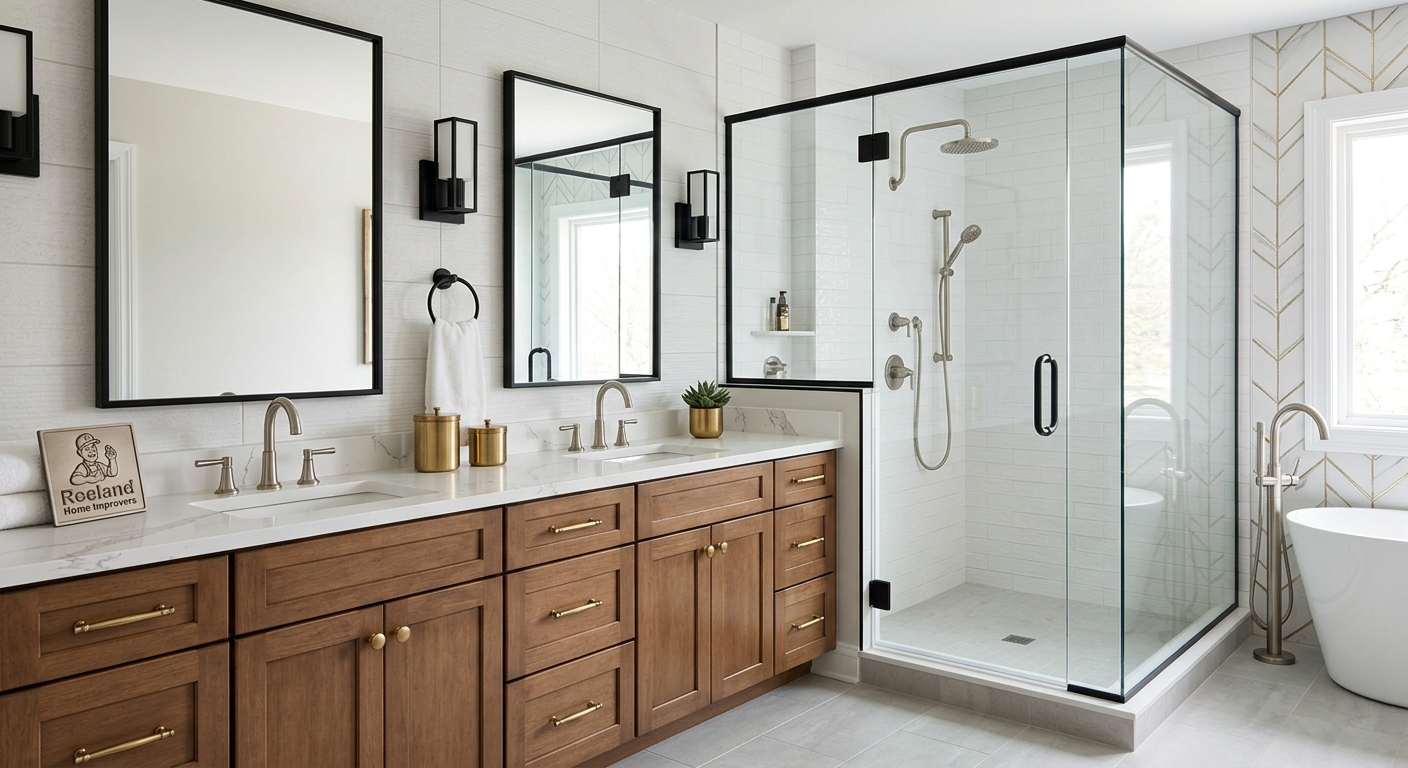
- Secondary (30%): Satin Brass hardware on a custom wood vanity with matching wall-mounted vanity sconces.
- Accent (10%): Matte Black grid lines on a frameless glass shower enclosure and black mirror trim.
Transforming Your Kitchen or Bath with Roeland Home Improvers
Mastering interior design is as much about precision installation as it is about choosing finishes. At Roeland Home Improvers, we bring decades of remodeling expertise to homes across Northern New Jersey. From full kitchen reconfigurations with custom cabinetry and quartz countertops to complete one-week shower conversions and spa bath transformations, our factory-certified team ensures every detail down to the final hardware finish is executed flawlessly.
.webp)
.svg)
.svg)
.svg)
.svg)

.svg)
.svg)

.svg)

.webp)

