Soundproofing Walls Between Bathrooms and Living Spaces: Materials and Insulation
Arnie Roeland
Aug 31st, 2026
Discover expert acoustic insulation materials and wall framing techniques to soundproof walls between bathrooms and living spaces with Roeland Home Improvers.
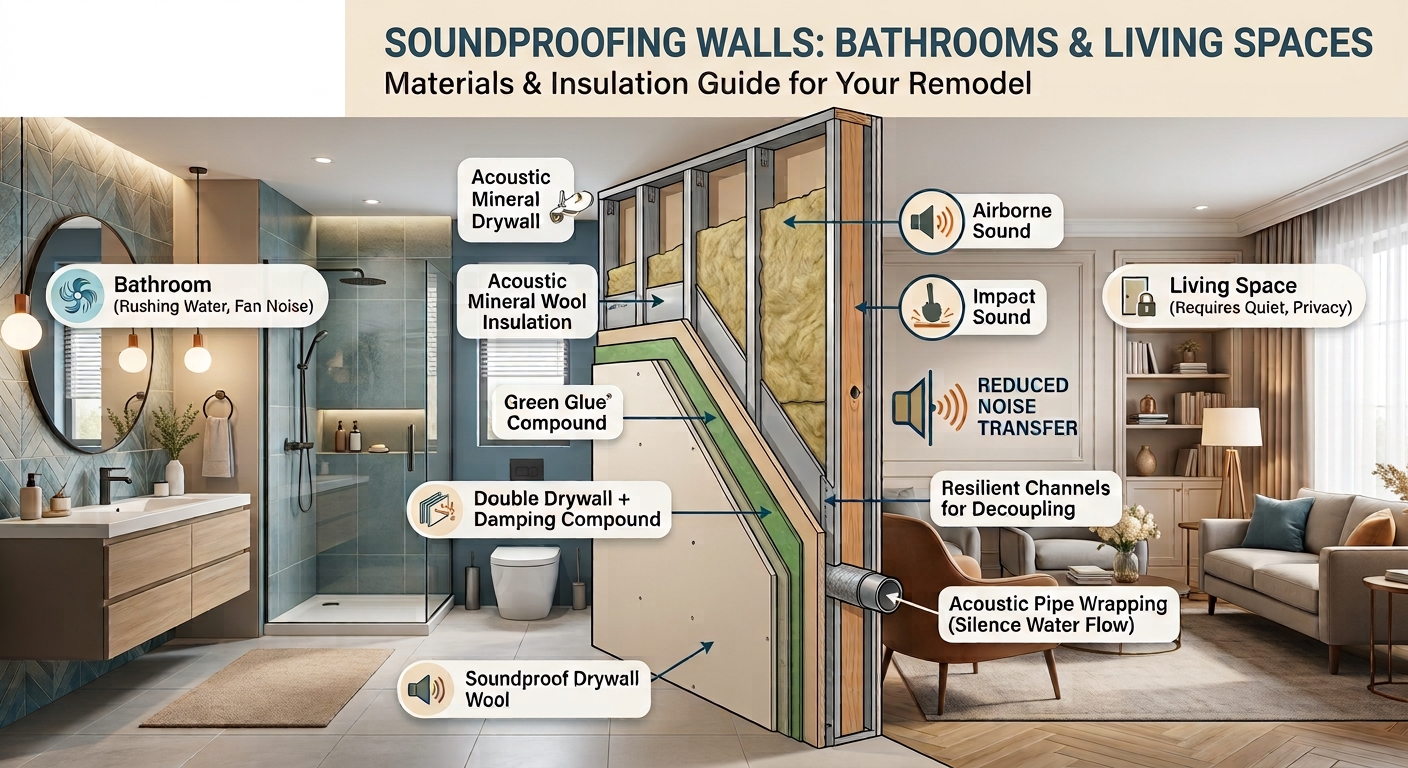
A newly remodeled bathroom should feel like a sanctuary. But nothing breaks the peace of a quiet evening in the living room quite like the intrusive sound of a flushing toilet, a rattling exhaust fan, or water rushing through pipes inside the shared wall.
When updating your home, acoustic comfort is just as crucial as selecting the perfect vanity, custom tile backsplash, or modern plumbing fixtures. Soundproofing the partition wall between a bathroom and adjacent living areas creates privacy, eliminates embarrassing noise transfer, and upgrades your home’s overall comfort.
At Roeland Home Improvers, we believe a complete renovation considers what goes behind the tile and drywall just as carefully as what goes on top of it. Here is everything you need to know about soundproofing materials, wall framing strategies, and acoustic insulation to keep your living spaces quiet and serene.
Understanding Bathroom Noise: Airborne vs. Impact Sound
To block sound effectively, you must understand how it travels through a wall. Bathroom noise generally falls into two categories:
- Airborne Noise: Sound waves that travel through the air, such as conversations, running water, fan humming, and music.
- Impact (Structure-Borne) Noise: Vibrations that travel through solid building materials, such as vibrating pipes, slamming cabinet doors, or the thud of heavy footsteps on floor joists.
A complete soundproofing solution requires mass, damping, decoupling, and absorption.
Top Insulation & Soundproofing Materials for Bathroom Walls
Adding high-density materials inside wall cavities absorbs sound waves before they pass into neighboring rooms.
1. High-Density Acoustic Insulation (Mineral Wool)
Standard fiberglass batt insulation provides basic thermal protection, but it lacks the density required to block sound. Mineral wool insulation (such as Rockwool Safe 'n' Sound) is engineered specifically for interior acoustic performance.
- Why it works: Dense basalt rock fibers trap sound waves and absorb airborne noise.
- Bonus benefits: Fire-resistant and moisture-resistant—ideal for damp bathroom environments.
2. Sound Damping Compounds (Green Glue)
Sound damping compounds act as a viscoelastic layer sandwiched between two sheets of drywall.
- Why it works: Converts sound energy into heat energy, preventing vibrations from passing from one sheet of drywall to the next.
- Application: Applied generously between a base layer of drywall and a second finish layer during double-drywall installations.
3. Mass Loaded Vinyl (MLV)
Mass Loaded Vinyl is a thick, flexible sheet material infused with heavy minerals.
- Why it works: Adds substantial mass to thin drywall assemblies without sacrificing excessive floor space.
- Application: Fastened directly to wall studs before drywall is installed, creating a dense barrier against low-frequency acoustic vibrations.
4. Acoustic Drywall & Resilient Channels (Decoupling)
Sound travels easily through wood studs because studs act as bridges. Decoupling breaks this physical connection.
- Resilient Channels (Hat Channels): Metal rails mounted horizontally across studs using sound isolation clips (RSIC-1). Drywall attaches to the channel rather than the stud, leaving a sound-breaking air gap.
- Soundproof Drywall: Specially manufactured sheets (like QuietRock) that combine drywall layers and viscoelastic polymers into a single heavy panel.
Step-by-Step Soundproofing Strategy During a Bathroom Remodel
If you are planning a full bathroom or living space renovation, incorporating sound isolation during construction is seamless and cost-effective.
Don't Forget Plumbing and Fixture Noise
Walls are only half the battle. Pipe chatter and drain rush are major sources of bathroom noise transfer.
- Cast Iron vs. PVC Drain Pipes: Modern PVC drain lines are lightweight and amplify the sound of rushing water. Wrapping PVC pipes in sound-deadening foam or replacing critical vertical drain drops with cast iron dramatically silences plumbing noise.
- Silicone Isolation Wraps: Ensure water supply lines are isolated from wood studs using rubber grommets or insulated clamps rather than hard plastic straps.
- Quiet-Rated Exhaust Fans: Select an exhaust fan rated at 1.0 sone or lower for whisper-quiet operation.
Upgrade Your Home Comfort with Roeland Home Improvers
Whether you are completing a full master bath transformation, converting a tub to a walk-in shower, or redesigning adjacent living spaces, complete craftsmanship means addressing both aesthetics and acoustics.
.webp)
.svg)
.svg)
.svg)
.svg)

.svg)
.svg)

.svg)

.webp)

