The Complete Playbook for Northern NJ Tub-to-Shower Conversions
Arnie Roeland
November 9th, 2025
A tub-to-shower conversion sounds simple on paper. Remove the tub, install a shower, finish in a day or two.After hundreds of these projects across Northern New Jersey over 43 years, I can tell you...
A tub-to-shower conversion sounds simple on paper. Remove the tub, install a shower, finish in a day or two.
After hundreds of these projects across Northern New Jersey over 43 years, I can tell you the reality is different.
Most conversions fail in three predictable ways: drainage problems that show up months later, water damage that spreads behind the walls, and that cheap insert look that screams "budget job."
The difference between a conversion that works and one that becomes a liability comes down to sequence. Do the steps in the right order with the right materials, and you prevent the problems before they start.
Here's the exact playbook we use at Roeland Home Improvers.
Why Most Tub-to-Shower Conversions Fail
The failures I see from other contractors follow patterns.
The drainage issue is the most common. Showers require a 2-inch drain. Tubs only need 1.5 inches. Building codes mandate the upgrade, but many contractors leave the original 1.5-inch drain in place.
The result? Slow drainage. Standing water. Water damage that spreads.
If your shower backs up because of an undersized drain and overflows, your insurance may not cover the damage. When you sell your home and the new buyer discovers the code violation, you become liable for the repairs.
Water damage comes next. Industry data shows 43% of bathroom projects experience water damage and leaks. The primary cause is inadequate waterproofing.
Contractors skip the waterproof backer boards. They use standard drywall. They don't install proper membrane systems beneath tile.
The water finds its way in. By the time you notice, the damage has spread behind the walls.
The cheap insert look is the third failure. Prefab plastic shower wall systems installed without proper planning lead to misalignment, visible gaps, and a bathroom that looks like a DIY disaster.
When measurements are inaccurate or walls aren't level, the insert doesn't fit properly. You end up with leaks and poor drainage from uneven surfaces.
The Hidden Problems Behind the Walls
Before I walk through the installation sequence, you need to understand what we find when we remove old tubs.
Water damage shows up in most older bathrooms. Weakened subfloors. Compromised studs. Outdated plumbing that needs replacement.
There are usually signs that help us anticipate water damage in our quotes. Discoloration around the tub. Soft spots on the floor. A musty smell that indicates mold.
When we demo down to the studs, we address these issues before moving forward. Failing to fix structural problems before installing the new shower creates a foundation that will fail.
The floor level matters more than most contractors realize. If the floor isn't level before you install the shower base, drainage issues are guaranteed. Water pools in corners. The shower doesn't drain properly. You end up with standing water and potential mold growth.
We check and correct the floor level before the base goes in. This step alone prevents most drainage problems.
The Roeland Home Improvers Installation Sequence
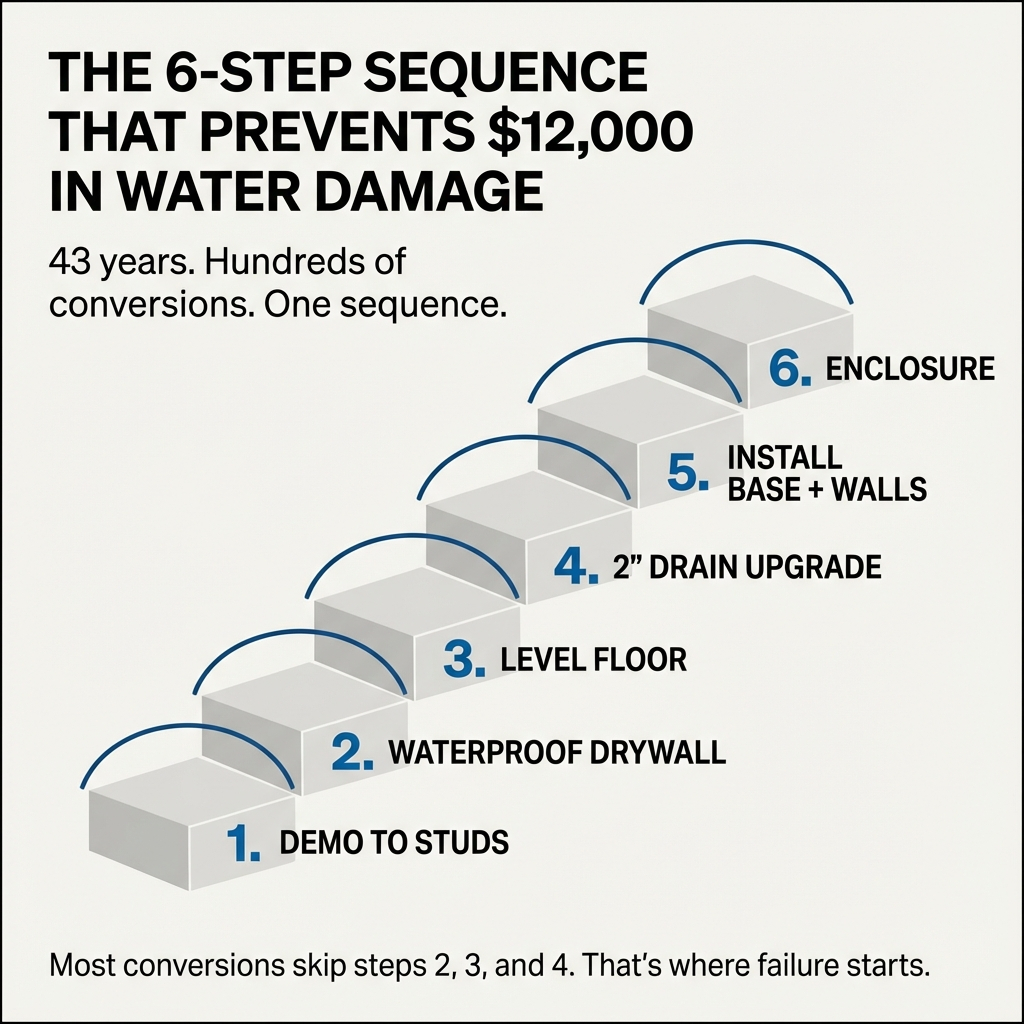
Here's the exact order of operations that prevents the three major failure points.
Step 1: Complete Demo to the Studs
We remove everything down to the drywall and studs. The tub comes out. All tile and backer board comes out. Old plumbing gets exposed.
This is where we discover and address water damage. If the subfloor is compromised, we replace it. If studs show rot or water damage, we replace them.
We close off the bathroom area completely during demo. Dust and construction materials don't spread to other parts of your house.
Timeline: This takes one full day for a standard tub-to-shower conversion.
Step 2: Install Waterproof Drywall
After addressing structural issues, we install waterproof drywall throughout the shower area.
Standard drywall absorbs moisture. Even "green board" moisture-resistant drywall isn't enough for shower installations. Waterproof drywall creates a barrier that prevents water from reaching the studs.
This step eliminates the possibility of water damage behind the walls. The investment in waterproof drywall costs more upfront but saves thousands in potential water damage repairs.
Step 3: Verify and Correct Floor Level
Before the shower base goes in, we verify the floor is level in all directions.
We use a level to check multiple points across the shower area. If we find any slope or unevenness, we correct it with self-leveling compound.
A level floor ensures proper drainage. Water flows toward the drain instead of pooling in corners.
Step 4: Install the Shower Base
We install the shower base on the level floor. The base we use has a textured, non-slip surface that provides safety without looking institutional.
The drain gets upgraded to the required 2-inch size at this stage. We connect it properly to the existing plumbing, ensuring code compliance and proper drainage.
Most accidents in bathrooms happen when stepping over a tub wall into a slippery tub bottom. A walk-in shower base eliminates that risk while looking clean and modern.
Step 5: Install Shower Walls
After the base is secured and the drain is connected, we install the shower walls.
We don't use cheap plastic inserts. The walls we install are high-quality materials that look like tile but require minimal maintenance.
Proper installation means accurate measurements, level walls, and sealed seams. When done correctly, you can't tell where one panel ends and another begins.
Step 6: Install the Shower Enclosure
The final step is installing the shower enclosure. This could be a glass shower door or a shower curtain system, depending on your preference and budget.
Glass enclosures create a more open, spa-like feel. Shower curtains offer flexibility and easier maintenance.
Timeline: For a shower-only conversion, we complete the installation in one day after demo. Total project time is two days.
For full bathroom remodels that include the shower conversion, we take 5-7 days. This ensures quality work without rushing timelines.
Why We Refuse One-Day Conversions
You see ads for one-day bathroom transformations. Homeowners in Morris County have asked us to match those quotes.
We say no.
One-day conversions use plastic inserts installed over existing surfaces. The contractor doesn't demo to the studs. They don't address water damage. They don't upgrade the drain to code-compliant size.
They cover problems instead of fixing them.
The insert looks cheap because it is cheap. You can see the seams. The walls flex when you press on them. Within a few years, water finds its way behind the insert and the problems multiply.
Would you want a car that was assembled in 8 hours? We feel the same way about bathrooms.
Quality work takes time. We want to deliver a bathroom that lasts a lifetime, not one that looks acceptable for a few years before failing.
The Aging-in-Place Factor
More than 55% of homeowners now prioritize a larger shower over keeping a bathtub in the primary bathroom.
The shift is driven by two factors: aging-in-place needs and desire for spa-level amenities.
The National Institute on Aging found that 80% of senior falls happen in the bathroom. Stepping over a tub wall is the highest-risk moment.
A tub-to-shower conversion eliminates that risk. The walk-in design with a textured, non-slip base provides safety without the institutional look of grab bars and medical equipment.
When homeowners tell us they want a bathroom that works beautifully now but also safely for the next 20 years, the tub-to-shower conversion is our recommendation.
You get a modern, aesthetically pleasing bathroom that happens to be safer. The safety features are built into the design, not added as afterthoughts.
Material Costs and Timing in 2025
Material costs are up 3.4% this year. Tariffs on bathroom vanities and fixtures add another layer of cost pressure.
Homeowners ask me if they should wait for prices to come down.
The honest answer: The best time is always now.
You never know if costs will get worse. With current economic conditions and policy changes, waiting doesn't guarantee better pricing.
More importantly, the sooner you complete your bathroom remodel, the sooner you enjoy it. Delaying a project for potential savings means delaying the improved quality of life that comes with a better bathroom.
Between 41% and 51% of homeowners completed a home improvement project in 2024. Fourth quarter spending on home improvements reached nearly $5,000 per project—the highest single quarter of the year.
Demand for quality bathroom remodeling continues to grow. Contractors with proven track records stay busy.
What to Expect During Your Project
Most online timelines say "5-7 days" for a bathroom remodel and assume perfect conditions.
Here's what actually happens during a Northern New Jersey bathroom renovation.
Day 1: Demo and Assessment
We remove the existing tub and demo down to the studs. We identify and document any water damage or structural issues. We close off the work area to prevent dust from spreading.
Day 2: Installation (Shower Only)
We install waterproof drywall, verify floor level, install the shower base with upgraded drain, install shower walls, and complete the enclosure installation.
For shower-only conversions, your bathroom is functional at the end of day two.
Days 3-7: Full Bathroom Remodels
If you're doing a complete bathroom remodel beyond just the shower conversion, we take 5-7 days total. This includes new flooring, vanity installation, toilet replacement, lighting updates, and final finishing work.
The timeline ensures quality work. Our installers have been with the company over ten years. They know our standards and they don't rush.
Decisions don't get made mid-project. We finalize all design choices and material selections before we start. Once our team is on site, they're there to complete the project according to plan.
The Standards We Won't Compromise
We lose jobs because we refuse to cut corners.
We don't use plastic inserts. We don't skip waterproof drywall to save costs. We don't leave undersized drains in place.
We upgrade drains to code-compliant 2-inch size. We demo to the studs and address water damage. We verify floor level before installing the base.
These standards cost more time and money upfront. They prevent expensive failures down the road.
When we quote a project, the price reflects the quality of work and materials we use. We don't inflate prices to create negotiation room. We give one price based on doing the job correctly.
If our quote doesn't match your expectations, we don't fight about it. Our quality work doesn't come for free, and we won't compromise standards to win a bid.
What Happens After the Installation
Once you become a client of Roeland Home Improvers, we fix any problems that arise from our work.
We'd be lying if we said issues never pop up. They do. When they happen, we address them.
We've also been known to help previous customers with issues outside our normal scope—windows, doors, other home repairs. If we can help, we do.
This approach comes from 43 years of operating in Northern New Jersey. Our reputation is built on doing the right thing, even when it costs us time or money.
The Bottom Line on Tub-to-Shower Conversions
A proper tub-to-shower conversion prevents problems through sequence and materials.
Demo to the studs. Install waterproof drywall. Verify floor level. Upgrade the drain to 2-inch code-compliant size. Install quality shower base and walls. Complete with proper enclosure.
This sequence takes two days for shower-only conversions. It prevents drainage issues, water damage, and the cheap insert look that plague most conversions.
The investment in proper materials and installation methods costs more upfront. It saves thousands in repairs and delivers a bathroom that works safely and looks great for decades.
After hundreds of these projects across Northern New Jersey, this is the playbook that works.
Q: Why do you insist on changing the drain size during a tub-to-shower conversion?
A: This is one of the most critical plumbing steps that quick-fix contractors skip. By building code, bathtubs only require a $1.5\text{-inch}$ drain, but stand-alone showers mandate a larger, $2\text{-inch}$ drain to handle the immediate volume of water. Leaving the old, undersized drain in place causes slow drainage and standing water, which can lead to leaks and mold. Furthermore, keeping an un-upgraded drain is a code violation that can make you liable for repairs when you eventually sell your Northern New Jersey home.
Q: What materials do you use for waterproofing behind the shower walls?
A: We do not use standard drywall, nor do we rely on standard moisture-resistant "green board," as neither is durable enough for a high-moisture shower environment. After stripping the space down to the studs, we install actual waterproof drywall throughout the entire shower area to create an absolute barrier against moisture. This foundational step keeps water from reaching the wooden studs and prevents the hidden structural rot that compromises 43% of standard bathroom renovations.
Q: If you don't use cheap plastic inserts, what do your shower walls look like?
A: We install high-quality wall systems that give you the premium, high-end look of beautifully laid tile but without the frustrating, high-maintenance upkeep of traditional grout lines. Because our experienced team takes the time to verify and correct your floor level with self-leveling compounds and align your framing before the walls go up, the panels fit flawlessly. You get a clean, modern aesthetic with tightly sealed seams where you can’t even tell where one panel ends and another begins.
Q: How does a tub-to-shower conversion help with "aging-in-place"?
A: According to the National Institute on Aging, 80% of senior falls occur in the bathroom, and stepping over a high bathtub wall is the highest-risk moment. Over 55% of modern homeowners now prefer a spacious walk-in shower over a traditional tub. Our conversions eliminate that step-over hazard by utilizing a low-profile, walk-in shower base. To ensure safety without making your bathroom look like a clinical medical facility, our bases feature a subtle, modern, textured non-slip surface integrated right into the design.
Q: What is the realistic timeline for a shower conversion versus a full bathroom remodel?
A: For a standalone tub-to-shower conversion, our process takes exactly two days. Day one is entirely dedicated to a clean demolition to the studs, assessing structural water damage, and replacing any rotted subfloors or studs. Day two is when we install the waterproof drywall, level the floor, upgrade the plumbing, and install the new base, walls, and glass enclosure. If you decide to expand the project into a full bathroom remodel—including a new vanity, toilet, flooring, and lighting, we plan for a thorough 5 to 7 days.
.webp)
.svg)
.svg)
.svg)
.svg)

.svg)
.svg)

.svg)

.webp)

