The Safety Features You Rejected in Your Parents' Bathroom Are the Luxury Features in Your Hotel Room
Arne Roeland
Dec 15th, 2025
I've done over 6,000 bathroom renovations in 43 years. About half of those were tub-to-shower conversions for aging homeowners. The conversation follows the same pattern every time. Adult children...
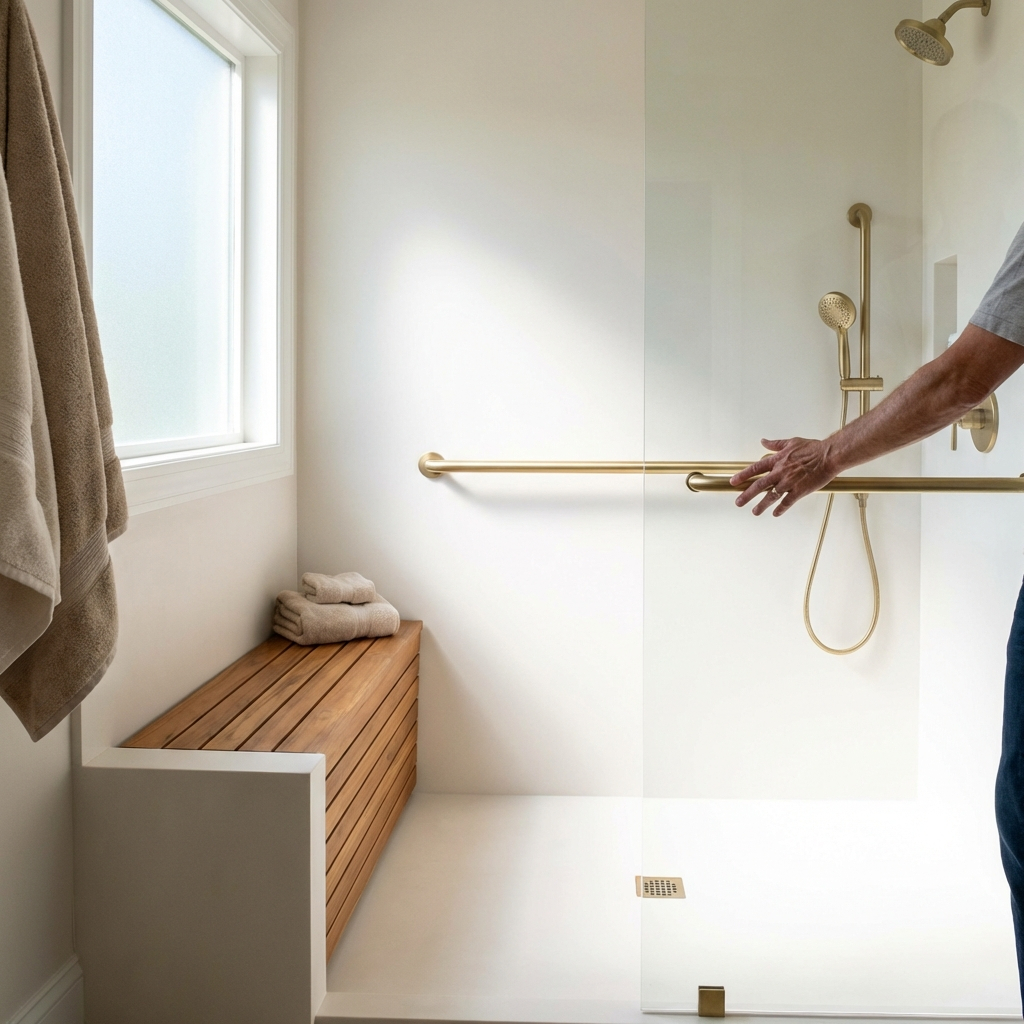
I've done over 6,000 bathroom renovations in 43 years.
About half of those were tub-to-shower conversions for aging homeowners. The conversation follows the same pattern every time.
Adult children call. They schedule a consultation. They want grab bars, a bench seat, a walk-in shower with no curb. They're worried about their parents.
Then the parents show up to the appointment and reject everything.
"I'm not that old."
"I don't need those old-person features."
"That'll make my bathroom look like a hospital."
Here's what I tell them: You stayed in a hotel last month. You probably loved the bathroom. Let me describe it.
What Your Favorite Hotel Bathroom Actually Has
Walk-in shower. No curb to step over.
Handheld showerhead on a sliding bar.
Grab bar mounted near the controls.
Built-in bench or fold-down seat.
Non-slip tile floor with proper drainage.
Lever handles instead of knobs.
Bright, even lighting.
Wide doorway.
You called it luxury. The hotel industry calls it universal design. Your kids call it safety features for the elderly.
Same bathroom. Different story.
The Real Difference Between Hotel Design and "Aging in Place"
Hotels figured out something the home improvement industry still struggles with.
Accessible bathrooms look and feel elegant when you stop designing them as medical equipment and start designing them as comfort features.
A curbless shower isn't an accommodation. It's a spacious, modern aesthetic that happens to be safer.
A bench seat isn't a walker substitute. It's a place to sit while you shave your legs or enjoy a long shower.
Grab bars aren't hospital rails. They're stability features that every human body appreciates when wet tile is involved.
The features are identical. The framing determines whether you see luxury or limitation.
Why We Resist Safety Until We Can't
I've watched this resistance for four decades.
Parents don't want to admit they're aging. Kids don't want to have the conversation. Everyone waits.
Then someone falls.
An estimated 235,000 people get injured in bathroom falls every year. About two-thirds of those injuries happen in the tub or shower.
Here's the part nobody talks about: the financial cost of waiting.
A walk-in shower renovation runs $20,000 to $30,000 in our area.
A hospital bill after a serious fall can run three times that amount. Sometimes more, depending on the injury and recovery plan.
You can spend $25,000 now to prevent the fall. Or you can spend $75,000 to $100,000 after it happens, plus the cost of the renovation you should have done in the first place.
The math is simple. The emotional resistance is not.
The Soaker Tub Problem Nobody Wants to Discuss
I'm not saying tubs are bad.
Everyone can appreciate a good soak or bubble bath. The problem is daily navigation.
Tubs are not easy to navigate. If you're just trying to shower, they're even more slippery.
Think about the physics: You step over a 14-18 inch barrier while balancing on one wet foot. You do this twice per shower. Every single day.
We use a statistic in our consultations: More than 50% of bathroom incidents happen when entering and exiting the shower or tub. Just like airplane incidents during takeoff and landing.
It's not about age. It's about repeated exposure to a high-risk moment.
Deep soaker tubs make that risk worse. The higher the wall, the more unstable the entry and exit.
Why Curbless Showers Are Becoming Standard
The bathroom industry is shifting.
As the population of homeowners continues to grow and the average age continues to rise, tubs are becoming less common in primary bathrooms.
The people who want to keep bathtubs are usually younger parents who still need to do bath time with kids.
Everyone else is moving toward walk-in showers. Not because they're old. Because they're practical.
Curbless showers are an essential trend for 2025, improving accessibility while creating a spacious and modern aesthetic.
Step-free showers facilitate secure aging-in-place for all ages and mobility capacities. The design is becoming standard because it works better for everyone.
When we recommend features like the lowest possible threshold, extra grab bars, and a seat if space allows, we're not suggesting medical equipment.
We're recommending the same features that define premium hotel bathrooms.
What Changes After the First Fall
Parents often don't like being the reason for safety precautions.
Then they have one bad fall or experience in the bathroom. They change their minds very quickly in the opposite direction.
I've seen it hundreds of times.
The grab bars they rejected become the first thing they reach for. The bench seat they called unnecessary becomes where they sit every shower. The curbless entry they thought looked institutional becomes the feature that gives them confidence.
The bathroom didn't change. Their perspective did.
Here's what I wish more families understood: You don't have to wait for the fall to make the change.
The Invisible Design Advantage
When executed thoughtfully, most people wouldn't realize a bathroom incorporates universal design principles.
A well-appointed bathroom that's generous but still warm and inviting looks nothing like a clinical or sterile space when aging-in-place features are properly integrated.
The key is treating these features as design elements from the start.
Grab bars that match your fixtures and coordinate with your tile.
A built-in bench that looks like intentional architecture, not an afterthought.
A curbless shower with beautiful tile work and proper drainage that creates a spa-like aesthetic.
Lever handles in finishes that complement your design palette.
This is what hotels have mastered. The safety features are invisible because they're integrated into the luxury experience.
What We Recommend in Every Consultation
Out of the 300+ bathrooms we do each year, about half are tub-to-shower conversions.
When we know it's for someone with mobility concerns, we recommend:
The lowest possible threshold for the shower — ideally zero-entry curbless design.
Multiple grab bars — placed strategically near controls, entry points, and seating areas.
A built-in or fold-down seat — if space allows, this becomes one of the most-used features.
Handheld showerhead with slide bar — flexibility for seated or standing use.
Non-slip flooring throughout — proper tile selection and installation matter.
Lever-style controls — easier to operate with wet or arthritic hands.
Adequate lighting — bright, even illumination reduces fall risk.
These aren't elderly accommodations. They're the features that make bathrooms work better for human bodies.
The Investment That Protects Everything Else
More than 75% of Americans over 50 plan to continue living at home as they grow older.
90% of senior citizens plan on staying in their homes for at least another decade.
Yet only 19% of homes have grab bars installed.
The gap between intention and preparation is where the problem lives.
Being preemptive about getting a walk-in shower can save you hundreds of thousands of dollars in medical bills.
An accessible, thoughtfully designed bathroom also appeals to a broader range of future buyers, increasing home value.
The renovation is an investment that protects your health, your independence, and your financial security.
What Your Bathroom Says About How You See Aging
I've been in this industry for 43 years.
I've watched the language around bathroom safety evolve. I've seen families have difficult conversations. I've taken calls from adult children the day after their parent fell.
The resistance to safety features is really resistance to what those features represent.
When you reject grab bars, you're rejecting the idea that you might need support.
When you resist a walk-in shower, you're resisting the acknowledgment that your body is changing.
When you insist on keeping the deep soaker tub you never use, you're holding onto an identity that doesn't match your daily reality.
Hotels don't have this problem. They design for human bodies as they actually function, not as we wish they would.
The same features that make a hotel bathroom feel luxurious will make your home bathroom safer, more comfortable, and more valuable.
The only question is whether you'll make the change before you need it or after you wish you had.
What Happens Next
We do this work every day.
We've completed thousands of bathroom renovations for homeowners across Northern New Jersey. We know how to integrate safety features so they look like intentional design choices.
Our warranty is the best in the industry. We use the best products available that are most cost-effective for our customers. We handle everything in-house with no subcontractors.
If you're having the conversation about bathroom safety with your parents or for yourself, we can help you have it differently.
Not as a conversation about aging and limitation.
As a conversation about creating a bathroom that works as well as the one in your favorite hotel.
Because the features are the same. The story just needs to change.
.webp)
.svg)
.svg)
.svg)
.svg)

.svg)
.svg)

.svg)

.webp)

