Why Your Kitchen Needs Zones, Not Just More Square Footage
Arnie Roeland
Jan 5th, 2026
I've been remodeling kitchens in Northern New Jersey for over four decades. The requests I hear today sound nothing like what homeowners asked for in 1983.Back then, people wanted more counter space....
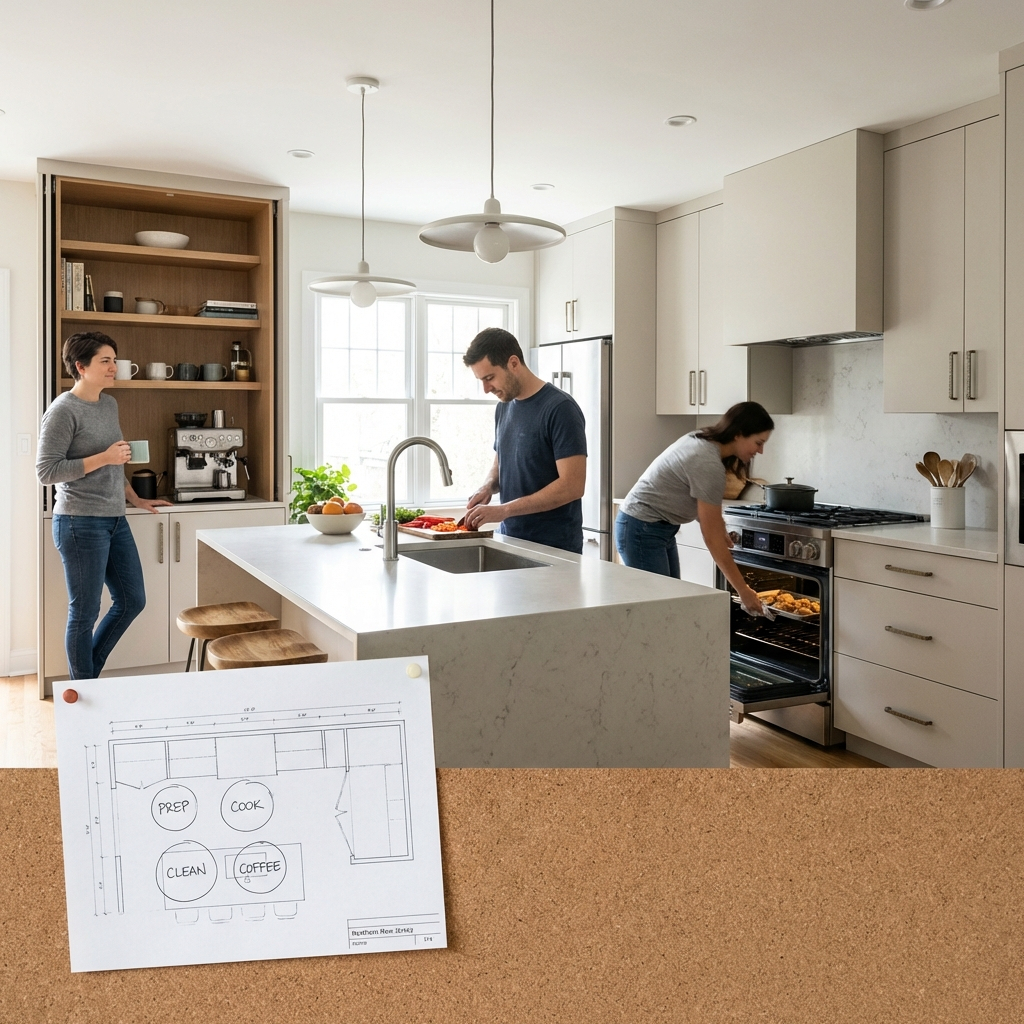
I've been remodeling kitchens in Northern New Jersey for over four decades. The requests I hear today sound nothing like what homeowners asked for in 1983.
Back then, people wanted more counter space. A bigger sink. Maybe an island if the room allowed it.
Now? They want a coffee station that doesn't interfere with breakfast prep. A baking zone separate from dinner cooking. Space for two people to work without bumping elbows.
The kitchen isn't just getting bigger. It's getting smarter.
The Work Triangle Is Dead
For years, kitchen design centered on the work triangle: sink, stove, refrigerator. Keep those three points close together, and you've got an efficient kitchen.
That model worked when one person cooked while everyone else stayed out of the way.
But 52% of homeowners now modify their kitchen layout during renovations. They're not just updating finishes. They're rethinking how the space actually functions.
Designer Kerith Flynn explains that kitchens are now "being designed with distinct areas" for cooking, prep, cleanup, storage, and gathering, centered around a highly functional island or worktable.
This isn't about trends. It's about how families actually use kitchens in 2026.
What Zoned Layouts Look Like in Real Life
A zoned kitchen separates activities that used to compete for the same counter space.
The prep zone sits away from the cooktop. You can chop vegetables while someone else stirs a pot. No traffic jams. No reaching over each other.
The cleanup zone includes the dishwasher, sink, and trash. Everything dirty stays in one area instead of spreading across the entire kitchen.
The storage zone groups pantry items, small appliances, and frequently used tools. You're not walking back and forth across the room to grab olive oil.
The cooking zone keeps the range, oven, and related tools together. Hot pans stay in one designated area, away from kids doing homework at the island.
Each zone has a purpose. Each one reduces the chaos that comes with multiple people sharing the same workspace.
The Details That Make Zones Work
Zoned layouts need thoughtful finishing touches. I've noticed homeowners paying more attention to small details that used to be afterthoughts.
Cabinet hardware matters now.
Interior designer Lauren Gilberthorpe points out that "handles with subtle etched details" are becoming popular because they add texture and create a tactile, almost sculptural quality that elevates even simple kitchens.
Hardware isn't just functional anymore. It's one of the few parts of your kitchen you touch dozens of times a day. The feel matters.
You can swap cabinet pulls yourself. It's an affordable update that personalizes your space without tearing anything apart.
Backsplashes are getting simpler.
Solid-slab backsplashes that extend your countertop material up the wall are replacing intricate tile work. They create a seamless look that's easier to maintain.
No grout lines to scrub. No complicated patterns to clean around. Just one continuous surface that looks elevated and stays that way.
Planning Zones Around Your Actual Life
The best zoned kitchen reflects how you actually cook, not how design magazines say you should.
Do you bake every weekend? You need dedicated counter space for rolling dough, plus storage for flour, sugar, and mixers.
Do you make coffee before your brain fully wakes up? Put the coffee station away from the main prep area so you're not navigating around someone making breakfast.
Do your kids pack their own lunches? Create a snack zone they can access without disrupting dinner prep.
These aren't luxury features. They're practical solutions to real problems you face every day.
What This Means for Your Next Renovation
When I meet with homeowners, I ask about their daily routines before I talk about cabinets or countertops.
Who cooks? How many people use the kitchen at once? Do you entertain? Do you need space for kids to do homework while you prep dinner?
The answers shape everything. Layout matters more than finishes. Function comes before aesthetics.
You can have beautiful cabinets in a kitchen that doesn't work for your family. Or you can have a well-planned space that makes every meal easier to prepare.
I'd rather give you the second option.
Zoned layouts take more planning upfront. You're not just picking materials from a catalog. You're thinking through how traffic flows, where people naturally gather, and what activities happen simultaneously.
But that planning pays off every single day. For years.
The Bottom Line
Kitchen design in 2026 prioritizes how spaces function over how much space you have.
Zones create order. They let multiple people work without colliding. They keep hot pans away from homework. They make cleanup faster because everything has a designated place.
This approach requires thinking beyond the work triangle. It means planning your kitchen around your actual life instead of outdated design rules.
After 43 years of kitchen renovations, I can tell you this: the families who plan zones first and pick finishes second end up with kitchens they actually enjoy using.
The ones who do it backward usually call me back in five years asking to fix the layout.
Your kitchen should work for you. Not the other way around.
.webp)
.svg)
.svg)
.svg)
.svg)

.svg)
.svg)

.svg)

.webp)

